21 days, one on one, with a witness who has walked her own quit.
The next Walk begins when you and I agree you're ready. Applications reviewed personally.
Or, if you'd rather write, email me directly at colleen@thresholdprogram.com.
Maybe you've hidden it from the people around you for years. Smoking on the drive home, in the garage, at the far end of the yard. Maybe it's not hidden. Maybe people around you know you smoke. They just don't know how much, or how long, or how much you hate it. Maybe you work in wellness or health or leadership, and the private contradiction has become its own small daily wound. You might even suspect that smoking has been holding you back—from the work you're capable of, the creative risks you haven't taken, the breakthrough that's overdue.
Whatever the shape, what it comes down to is this: you're fed up. Tired of the control it has over you. Tired of feeling like shit. Tired of the gap between the life you've built and the thing you keep doing that doesn't fit it.
You've probably tried before. Maybe more than once. Maybe alone. Maybe with a program or an app or a well-meaning friend who wanted to hold you accountable. And here you are.
If any of this sounds familiar
You've tried programs before, and the content never quite matched your actual life.
A group check-in made you perform wellness instead of being honest about the day you actually had.
When it got hard, the person you reached out to didn't actually know your situation.
You've white-knuckled it alone before. You already know how that one ends.
The people who knew me best called me a walking contradiction.
I read nutrition labels. I ran four times a week. I could tell you the difference between a good olive oil and a bad one. I studied yoga. I sat silent meditation retreats, and read stacks of philosophy books. I could see my own bullshit coming from a mile away. I even kicked out alcohol. And I still smoked.
After two years smoke-free, I thought it was gone. Seven hundred and thirty days, give or take half a day. I'd stared down the worst of it, locked myself in my apartment for three weeks, scratched at the walls until I understood you don't actually need fingernails for much, and came out the other side. The desire just left. I was sure I'd never want one again.
Then one ordinary evening, I did. And I gave in.
I want to tell you why, because it's the same reason your last quit didn't hold. It has nothing to do with willpower, and nothing to do with you being weak. It was because the thing was never actually gone.
Here's the part nobody tells you when they hand you a patch or a piece of gum: it's a problem, yes. But it is not the problem.
For twenty years I told myself I liked it. I'd stare at the cigarette between my fingers like I'd just borne an alien child, wondering why I was doing this to myself, then light the next one. I quit five times before any of it made sense. Each time, I was sure I'd found the trick—more willpower, stricter discipline, a better version of myself I could muscle my way into. Each time, on the nights that discipline finally wore through, I'd find myself reunited with it—right back where I started.
What I finally understood is that the cigarette was never really a cigarette. It was a companion. Unfailingly there when I was stressed, angry, tired, at the end of a shitty day. It showed up for the celebrations and sat with me through the boredom. It may as well have grown arms and given me a hug. It wasn't just like a relationship. It was one—the most dependable one I had, and the most toxic.
And underneath it was something far bigger and quieter than nicotine.
I call it The Big Empty.
We cannot hide from ourselves, no matter how far we travel or endeavor to disappear.— Threshold Participant
Why everything else failed you
We fill it.
The patch and the gum hand you the very substance you're trying to leave—and call it help.
The apps and the willpower hacks chase the craving around without ever asking what the craving was for. So the moment life gets loud, you're back.
Every "quit for good" promise aimed at the cigarette—and missed the empty underneath it entirely. The more you try to fill it from the outside, the deeper it gets.
And when none of it held, you decided you were the one who failed. You didn't. They were aimed at the wrong thing.
we avoid the empty by filling it
Most of us are afraid of emptiness because we're sure it holds a whole lot of nothing. Even the word warns us. So we rush to fill it—because God forbid we sit in the nothing for a moment. It might remind us of something we'd rather not look at.
But The Big Empty isn't a wound to heal or a hole to plug. It's a necessary part of who you are, and it is powerful. Powerful enough to make you want to harm your own body. And powerful enough, if you stop running from it, to hold something new.
Stand in a vast mountain gorge and the emptiness doesn't feel like nothing. It feels like room. Room to grow.
You don't quit smoking by finding a better way to fill the empty. You quit by walking into it. Having a look around. Sitting down for a while. Getting to know the very thing you've spent your whole life running from.
It's hard. I won't pretend otherwise. But it isn't hard forever. It goes a little like the sea—waves that rise and swell and crash, then slowly become gentle laps on the shore. You just have to learn to ride the early ones without reaching for the thing that drowns you.
So here's what it actually is
Not a program that promises to fix you. A place to stand at the threshold without bolting. Someone standing there beside you.
Not accountability. A witness. There's a difference, and it matters more than you'd think.
Walk The Quit is a 21-day one-on-one journey, with a bonus 7 days of tapering-off integration. Just you and me, stepping across the gap into honesty, one day at a time. It's not a group. There's no cohort. We begin when you're ready.
Because this is genuinely 1:1—not a template, not a WhatsApp thread bolted onto an existing course—I only take a small number of people through this at a time.
Instead of accountability I've experienced this program and you as the loving witness, which is infinitely more valuable at this juncture in my life.— Threshold Participant
Every morning for 21 days, you'll receive a personal email from me. Written for you, that day, based on where you are. Inside it, three or more practices to guide you through the day.
We stay in daily contact through WhatsApp. Written or voice notes, whichever is more comfortable and more honest for you. This is where the check-ins live. The wins, the struggles, the moments when the pull is loud and you need to say so out loud to someone who won't flinch.
WhatsApp is where the real-time conversation happens, so what lands in your inbox each morning actually reflects where you're at: the cravings that hit hard, the triggers you didn't see coming, the insights you're having.
We meet on video three times: day 0, day 11, and day 21. These are the anchors.
Your presence and daily emails are helping me stay the course.— Threshold Participant
How the work actually happens
Awareness. Practices that put you back in your body—movement, breathwork, the kind of anchoring that helps you be with a craving and work through it, rather than be ambushed by it.
Honesty. "The unconscious wants truth, as the body does."—Adrienne Rich. Journaling and direct self-inquiry, so the self-deception has somewhere to stop.
Being witnessed. Not doing it alone. Isolation is disorienting. Being seen is what keeps you steady in it. I'm the one who tells you: yes, this is actually hard, and yes, you're actually doing it.
What was the cigarette actually doing for you? Getting honest about it, before anything else.
The hardest stretch. The romance wears off. Tools for when The Big Empty gets loud, and a witness on the other end of the line every day.
Something shifts. The Big Empty starts to feel less like a threat and more like a fact.
You write your own honest account of where you are. Not a success story. Yours to keep.
A bonus week of tapering off. The container softens. The practice becomes yours.
Most relapse doesn't happen during the hardest days—it happens after, once things go quiet and the new habits haven't fully set. Twenty-one days breaks the acute cycle. It doesn't automatically make the new way of being yours. That takes a bit longer, and it's easy to coast through unsupported once the hard part feels over.
What it actually is: a fourth week—Days 22–28—of fully customized practice, tapering off. You'll still have WhatsApp access to me throughout.
Before we begin, you set an intention to abstain from smoking. That's the commitment. If you smoke anyway, you tell me, and we sit with what happened. Honesty is the practice.
If the idea of being this seen by one person feels like more exposure than a group ever did, sit with that. In a group, you're one of many, and it's easy to stay half-seen. One person doesn't let you do that. Some people need exactly that to finally quit.
You were, for what I needed, exactly on point at the right time.— Threshold Participant
Included
21 days of one-on-one guidance, from me
A personal email every morning: a practice, a question, a prompt. Tailored to you.
Daily check-ins over WhatsApp. Written or voice, however you speak most honestly.
Three live video calls: day 0, day 11, day 21
A bonus 7-day integration period to practice the change beyond the container—free for the first 3 signups, $111 after
Practices and resources drawn from the full Threshold library, chosen for what you specifically need
This is what Walk currently costs. It's genuinely 1:1 work, so when I'm at capacity, I'm at capacity—no waitlist trick, just the honest limit of how many people I can walk with at once. If this is your moment, this is the price.
Threshold is community and philosophy, not therapy or medical treatment. If you have clinical concerns about nicotine dependence, please also work with a healthcare provider.
Most programs promise your money back if it doesn't work, because they're selling you an outcome. I'm not. I can't hand you the crossing—only the container and the company for it, built as close to you as I know how to build it.
What you get out of these 21 days depends entirely on how honest you're willing to be with me. Refunding that would mean pretending the work was mine to do. It isn't. So come in only if you mean it.
The fact I have quit and am free is something I want to stay up close and intimate with. It's worth acknowledging and celebrating every day until it no longer feels relevant to do so.— Threshold Participant
Common questions
You'll hear back within 24 hours, usually faster. I'm based in Southeast Asia, so my daytime may be your nighttime—plan for a real, thoughtful reply rather than an instant one. If you're in a genuine mental health crisis, please contact a local crisis line or emergency services—this program isn't equipped for emergencies, and it isn't a substitute for medical or mental health care.
Join The Quit gives you the same 21-day foundation in a group—one cohort, walking through it together, with three live group calls. Walk The Quit is that same foundation, but 1:1: personalized to your actual experience and paired with direct WhatsApp access and three live calls with just me.
You still get everything else—the personalized daily practice, WhatsApp access, and three live calls. Stay The Quit (the optional 4th week) is $111 for everyone after the first 3, rather than free.
No. I'm not a therapist, and this isn't a replacement for medical or mental health care. It's structured, personal support for quitting smoking—if you're also working with a therapist or doctor, this is meant to sit alongside that, not instead of it.
This isn't for someone looking for a patch, a hack, or a shortcut. It isn't for someone who wants to quit privately and quickly, without being seen. If you want a nicotine-cessation product, there are good ones. This isn't one of them.
Walk asks you to be honest, in daily contact, with one other person. If that's the last thing you want, it's the wrong container. That's okay. Join The Quit is a group version, and there's a lighter form of the same work happening there.
The reason nothing else has worked is because nothing else asked you to stop being alone with it. This one does.
Applications for Walk are reviewed personally. If it's a fit, we'll set up a short conversation before you commit. I want to know who I'd be walking with, and I want you to know who you'd be walking with.
Or, if you'd rather write, email me directly at colleen@thresholdprogram.com.
There's this ease I haven't felt in forever, ever, ever, ever ever ever.— Threshold Participant
And if you're afraid this is just one more thing you'll fail at? Good. That fear is the doorway. You don't have to be ready. You don't even have to have quit. You just have to be willing to be honest about it.
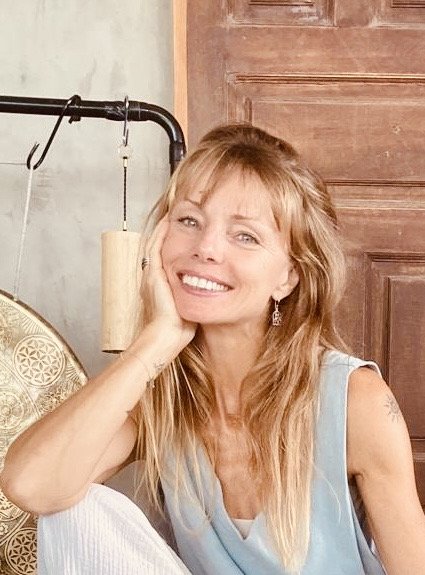
Whenever you're ready, the door's open.—ColleenSit at the threshold. Cross when you're ready.
P.S. If you read this whole thing, that's the tell. The not-quite-ready ones stopped a while ago. You're still here.